Do you know why plagiarism is unethical and copyright infringement is illegal in Nigeria? If you don’t, then we’ll tell you the best ways to avoid directly/indirectly dubbing off someone else’s work. As well as giving you truths about your rights on copyright and laws of infringement.
In this piece, you will get to know the basic laws of copyright and what happens when you violate them, as a Nigerian. Read to the end to know more about Plagiarism & Copyright Infringement according to the federal Constitution of Nigeria.
Plagiarism & copyright infringement; what do these acts mean?
Plagiarism & Infringement are two separate words with a lot of impact in the present world. The act of taking and putting up a person’s original work or idea and presenting it as yours is called plagiarism. This act can also be represented with many words like theft, stealing, copying, and many more.
So far in Nigeria, it has been described as an academic crime with next to no legal liability. It is quite common among students because the use of another person’s language, phrases, and thoughts without informing the concerned owner.
Copyright infringement on the other hand is an act of using work protected by copyright without the utmost permission for the usage, which leads to infringing of some exclusive rights consented to the copyright. The latter can also be called intellectual property.
An infringement can be defined as an act of unlawfully copying material under the intellectual property law, thus interfering with the right of the owner. When it comes to matters of intellectual property, the complainant would need to create valid copyright ownership.
Each of these acts is aided by visible examples. For instance, anyone can plagiarize nearly anything, especially works that are not protected by copyright. If you were to claim to have written a very popular Nigerian script that was acted on a theatrical stage, for example, it would count as plagiarism but not as an infringement of copyright. Why? This is because the play is merely a public domain and is not protected by copyright.
Common types of plagiarism often used in Nigeria
When it comes to this act of copying, there are also common types you practice without even knowing. Read to the end of the subsequent paragraph to know more about them.
1. Direct copying
This is the word-for-word transcription of a section of someone’s work, without references and quotation marks. When you intentionally plagiarise someone’s work it is indecent, dishonest, and can be punished with disciplinary actions, which might include expulsion.
2. Self-plagiarising
This occurs most times in Nigerian schools. Most students submit their previous work, or mix parts of their previous works, without permission from the teachers or professors involved. For example, it would be inappropriate to incorporate your junior school part of a term paper you wrote and rewrite it in your senior year, just because they are the same topics, with the same questions.
This also applies to submitting the same work for assignments in different classes without prior permission from both professors.
3. Mosaic copying
This happens when phrases are borrowed from a source without using quotation marks, or finding synonyms for the author’s language while maintaining the same general structure and the original meaning. It is sometimes called patchwriting. This kind of paraphrasing, whether intentional or not, is academically dishonest and punishable especially if found out about by the related management.
4. Accidental copying
This occurs when a person fails to cite their sources, misquotes their sources, or paraphrases unknowingly by using similar groups of words, and sentence structure without attribution. As an individual, you must learn how to cite sources and take careful notes and valid facts when doing research. These cases are taken as seriously as any other copying act cases and are subject to the same range of consequences as other types.
What are the common types of infringement cases in Nigeria?
You can’t expect the rule that binds a music company to tie down a publishing company, no! It’s not possible. Mind you, intellectual property has various types you can count on.
Before moving forward on the types, an example of intellectual property infringement is the use of someone else’s music in your videos, which is quite common. Mostly, your home movies, presentation, and other works use songs that you have not obtained permission to use as background music. This act could be liable for copyright infringement.
Intellectual property infringement happens when someone violates the exclusive rights of a copyright owner without the owner’s permission. There are three main types of infringement commonly seen in Nigeria. We have direct infringement, contributory infringement, and vicarious infringement, with their explanations below.
1. Direct infringement
In most cases, a complainant proves direct infringement by showing ownership of valid copyright that the defendant copied from. But in most cases, evidence of direct copying is not available, so the courts use the two-part substantial similarity test in which the complainant can establish a copy by showing that the infringer had access to the work, while the two works are similar. The defendants in these cases are known as the “direct infringers.”
Though similarities of both works might be hard to figure out, to prove the substantial similarity, the courts apply an extrinsic test that compares the individual elements of the two works to figure out specific similarities between them. While the intrinsic test peeks at the similarities from the viewpoint of an ordinary observer taking into account.
The first element of direct infringement requires the ownership of a valid copyright. The courts require the complainants to produce a certificate of registration before the case can proceed.
2. Contributory infringement
This infringement is not based on a statute but direct infringement. A contributory infringer is a person who causes or materially contributes to the infringing conduct of another person or entity. This person must know about the infringement.
3. Vicarious infringement
This infringement is based on the agency principle of superiority, usually between the employer-employee, but may be shown even if there is no such relationship. A vicarious infringer is a person or company that has the right and power to control the acts of the direct infringer, and direct financial attention to the infringing activity.
What are the notable differences between plagiarism and copyright?
Both acts are often compared together, but from their definition and types, you can see that they are different. The act of copying is mostly considered an ethical issue, while copyright infringement is a legal issue.
When you pass off someone else’s work or ideas as your copy, is an infringement of copyright which also refers to the use of copyright-protected material without the permission of the copyright holder. These acts involve using someone else’s work without permission.
In this context, the act of copying involves works that are written in both printed and electronic format, while copyright infringement can involve art, novels, movies, computer software, music, art, novels, movies, website content, and more.
In addition, when it comes to crimes under the law, intellectual property infringement is a civil crime. While plagiarism is not a crime under the federal constitution of Nigeria, it can come with severe penalties.
Is plagiarism a legal violation of rights in Nigeria?
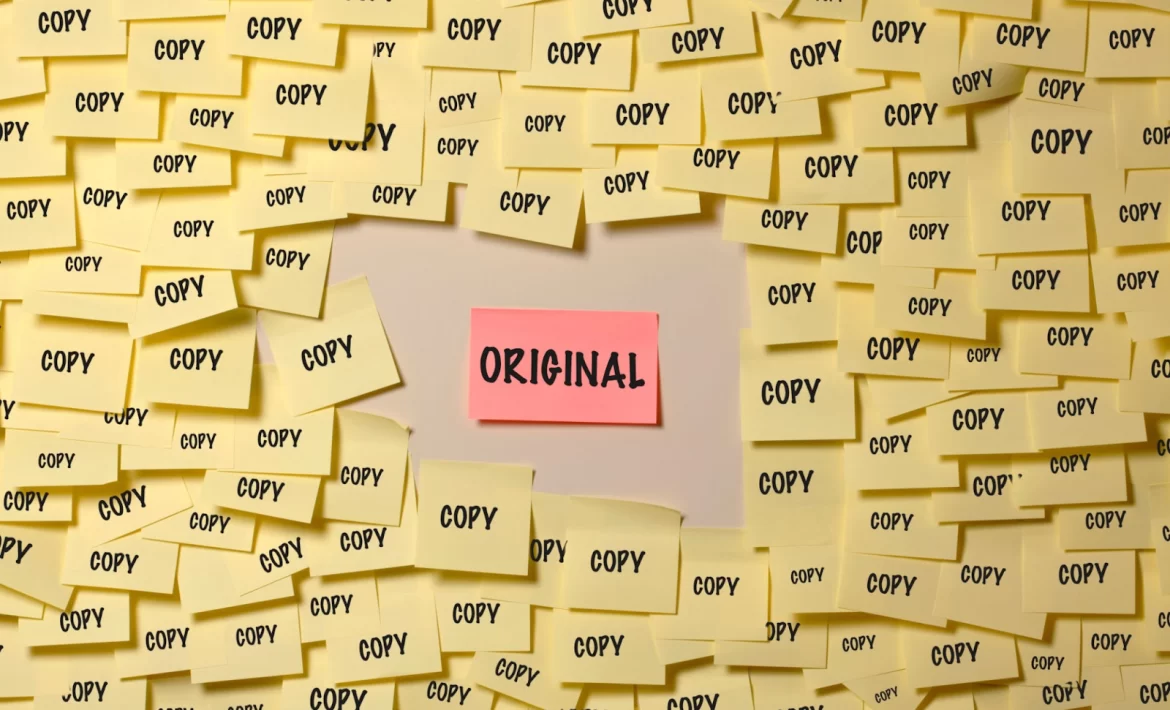
You can get answers to your question if you read to the end of this piece. On this account, several legal practitioners have spoken and given their opinion on whether or not plagiarism can attract legal actions in Nigeria.
Even though it is not a criminal or civil offense, it is illegal if it infringes a writer’s intellectual property rights, which includes copyright or trademark. For example, in Nigeria, the owner of a copyright can sue a plagiarizer in federal court for copyright violation.
While the copyright laws are absolute. You cannot use another person’s material without citation and reference to the real owner or author of the work.
This act has always been a dishonest practice of replicating works in various ways, particularly within the educational sector. Students who seem very satisfied with their studies, tend to copy one another’s work. This can be so worse that some students copy word for word and get caught very easily.
It can be fraudulent and misrepresented at times. In easy ways, it is the method of copying another person’s ideas or their works and deliberately making others believe that you are the originator.
There are various types of intellectual property law, while recognition of It also varies in different countries. Though, the popular types of it in Nigeria are patents, copyrights, trademarks, and trade secrets. Therefore, to replicate what has already been produced or written by the original owner, permission must be asked and granted before going on with it, especially in writing.
Note, that you’ve already known that this act is an ethical crime and a violation of your workplace or school’s honor code. If you’re caught doing this, you can be punished by the school, fired from your job, or even destroy your career. Infringement of intellectual property can come with serious consequences such as costly litigation.
Is there any punishment for plagiarism in Nigeria?
Yes! Especially if it violates the copyright law. Here, you have the punishments for this act in Nigeria.
Under the federal Constitution of Nigeria, Copyright Act (Section 20) says, if a person is hereby convicted by the Federal High Court for the possession, distribution, or sale of copyrighted material for purposes of business or trade, he or she is liable to a fine of 100 nairas for every copy of the infringed work or to a term of imprisonment not exceeding 6 months to 2 years.
Does plagiarism have consequences on academics?
Yes, it does, especially in Nigerian universities. Though the exact consequences and severity of coping vary by institution, the common and popular consequences include a lower grade, academic suspension, probation automatically failing a course, or sometimes expulsion.
As a Nigerian student, can plagiarism be avoided?
Though it’s not quite easy, especially if you have to copy and paste from the internet, you can avoid this by following the explained steps below.
1. Quoting from your ideas
Quoting is a means of copying a piece of text word for word. The copied text must be acquainted in your own words or language, enclosed in quotation marks, and evenly attributed to the original author.
2. Paraphrasing
Paraphrasing is an act of explaining something from a different source in your word or language. With a copy-pasted text, it does not mean just switching out a few words from it. To paraphrase properly, you should explain the author’s point in your own words to show that you have understood it.
3. Citing your sources without mistakes
Each time you quote or paraphrase, you must include an in-text reference that identifies the original author. Each citation must conform to a full reference in the list at the end of your paper. This affirms the source of your information, and as well helps the readers to locate the source for themselves if they would like to learn more.
4. Make use of a plagiarism checker
Most universities and firms make use of checkers to find out potential results. The checkers work in a way that they can scan your document, compare it to a database of a webpage and publication, and as well highlight passages that appear similar to other texts.
Thanks to the availability of these checkers, you can generally follow these norms. A score higher than 10% is troublesome and can get you into trouble, while a score between 5% and 10% is not necessarily bad.
Copyright Infringement In Nigeria
A right provided for it in Section 15 of the Nigeria Copyright Act? Without the license or authorization of the owner of the copyright, any external effort or work done on the copyright is said to be an infringement of the copyright.
Any person who republishes, commercially distributes and reproduces, or broadcasts copies of the work without the consent of the owner can be sued in Nigeria. The Federal High Court has original jurisdiction over this matter, according to section 251 of the federal constitution of Nigeria and section 46 of the Nigeria Copyright Act.
In cases where it is said that the infringement happened when the defendant was not aware, without any grounds for suspecting that copyright subsisted, the complaint would not be allowed damages. But shall be allowed to profit in respect of the infringement.
Also, note that no injunction would be issued for infringement that requires a partly completed or complete building to be demolished to prevent the completion of the partly completed building, as acknowledged in Section 16 of the Copyright Act.
Defenses for copyright infringement in Nigeria

When it comes to the defense against intellectual property infringement, they are not far secure. An instance is when a copyrighted work is used for private purposes like teaching, inter alia, scholarship, and not for commercial purposes. Or if the copyrighted work is not an expression of an idea; when the owner authorized the use of his work in a license.
The infringer might have no reason to know the work was protected by copyright if the contents of the original work are in the public domain. Then, a claim of copyright is improper. Note, if what was copied was not protectable, such as the facts from work and not the protected expression. Then the copyrighted work was not properly registered, making the court lack jurisdiction to hear the case.
The right can expire if the holder has forfeited or abandoned his or her rights in the work. When too much time has elapsed between the infringing act and the lawsuit, the similarities between the two works are relatable to a common source, such as existing musical work or screenplay.
These defenses are not broad as there are many other defenses to intellectual property infringement that may help the defendant in court. Note, to every offense, there is a defense and before any of these works can be competent for copyright, they must be featured with the quality of originality and expression. This right protects the original expression of an idea and not the ideas themselves.
6 ways to avoid copyright infringement as a writer in Nigeria
You can easily access materials on the internet and as well easily fall victim to copyright infringement. Even though there is no comprehensive list of what to do to avoid infringing on a copyright, taking these steps can guide you on infringing on existing copyright.
1. You have to understand the copyright laws
There is this saying when it comes to law “ignorance is no excuse for the law”. This statement is very true and effective when it comes to copyright. Not knowing the copyright laws only works to your disadvantage as an individual or corporation. When it comes to this you cannot claim ignorance as a defense. Thus, you should understand the way copyright works.
2. Have a mindset that every work is subject to copyright
Always have this in your mind and make it a good rule that every work is subject to copyright. You should always assume that all works you come across have copyrights. This will save you the trouble of unwilling intellectual property infringement in Nigeria.
3. Seek approval before using any work that is not yours
It is advised that you shouldn’t use any work that isn’t originally yours. The reason is that you can’t be accused of infringement if you didn’t use the work in the first place. Even if you must use a work, make sure you obtain the permission of the author of the work.
4. Fully understand the rights granted when allowed to use a work
When granted permission to use a work, simply understand the right given and the conditions attached to it. It is where you need to understand the important Terms of Use before using any wrong infringement.
5. Always check for a copyright license, when using work sourced on the internet
The internet is the largest library by far when it comes to sourcing materials. It has the quickest access to limitless resources which makes it many writers’ go-to sources. It is therefore good to identify the copyright attached to the materials you come across.
6. You can consult a lawyer
When it comes to the business of writing or content creation, the importance of consulting a lawyer can never be over-emphasized. Whenever you are not sure if your action would amount to infringing existing copyright, consult a lawyer. It costs far less to consult a lawyer than to defend an intellectual property infringement lawsuit.
How long does copyright last in Nigeria?
Copyright, when it comes to literary, musical, and artistic works (omitting photographs as exceptional) can last for seventy years. From the end of the year in which the author dies, and whether the author is a government or a corporate body—70 years and after the end of the year in which the work was first published with the right.
Is copyright governed by a law body in Nigeria?
Yes, it is. The copyright is governed In Nigeria, by the Copyright Act. The Nigerian Copyright Commission is the body charged with the enforcement and protection of copyright. The ownership of copyright is granted to the creator of a copyrighted work, mostly referred to as the “author” of the work.
Can copyright be transferred to another person?
Yes! Intellectual property rights can be transferred or assigned in whole or in part to another person. That is the sale of original work. For instance, a painting is equivalent to the transfer of intellectual property in most cases.
The ownership of the right may be transferred in whole or in part by different means like the Operation of Law or by Conveyance, and may be handed down by will or passed as personal property by the applicable laws of succession.
Conclusion
The basic summary of it all is that coping pertains to passing off someone’s work or ideas as one’s own, while intellectual property infringement means the use of copyright-protected material without the utmost permission of the copyright holder. Plagiarism & Copyright Infringement are different because coping is an ethical issue, while intellectual poverty infringement is a legal issue.
To put you off future stress or legal issues that you are currently facing, or are most likely to face, later on, AGATHA LEGAL is the right place to seek consultations from. With trained and well-versed lawyers and consultants who are ready to be at your service. To know more, visit our website—AGATHA LEGAL.
EXCELLENTTrustindex verifies that the original source of the review is Google. Excellent, diligent, consistent, and reliable service from Agatha Legal Services. The team was professional, responsive, and efficient throughout the process.Posted on GoogleTrustindex verifies that the original source of the review is Google. A truly excellent legal team, professional guidance, and prompt communication throughout the process. Highly recommended.Posted on GoogleTrustindex verifies that the original source of the review is Google. Excellent service. From start to finish. Thank you for making feel my worth.Posted on GoogleTrustindex verifies that the original source of the review is Google. What sets Agatha Legal apart is its unwavering commitment to excellence, professionalism, and client satisfaction. The team consistently demonstrates exceptional legal expertise, strategic thinking, and attention to detail in handling matters across diverse practice areas. A firm truly dedicated to delivering outstanding legal solutions.Posted on GoogleTrustindex verifies that the original source of the review is Google. The first time I spoke with Agatha Legal, it felt like I had known her for years. We connected so much that she put all my fears aside. She is not just professional but empathetic. For me, it is the humanity part of the conversation for me. I got what I was looking for. Thank you.Posted on GoogleTrustindex verifies that the original source of the review is Google. Working with Agatha Legal has been a beautiful experience. I'm super glad to have them manage all the legal requirements of my business registrations and also for the non-profit registration. My recent engagement for SCUML registration was so swift and quick as against the norm I had always heard about. I appreciate the professionalism and most importantly the thoughtfulness and candour she brings to the table. Thank you Agatha Legal.